
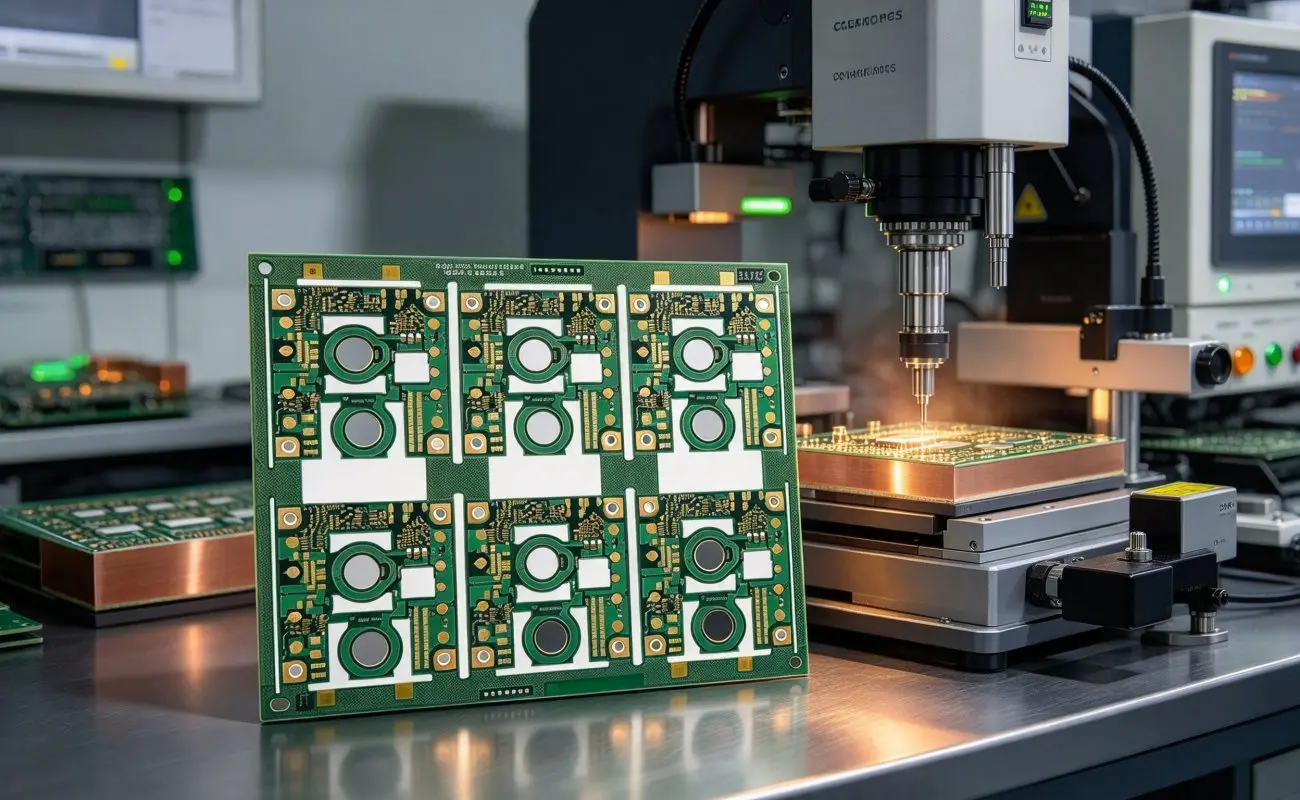
High-power electronic equipment requires printed circuit boards that can handle substantial current while maintaining stable performance at elevated temperatures. Industrial power supplies, renewable energy inverters, and high-power automotive systems all place demanding requirements on circuit design and material selection. A 14-layer heavy copper PCB combines thick copper conductors with multiple routing layers to support power distribution and complex circuit layouts. In addition, high Tg170 FR4 material helps the board maintain its structural stability during thermal exposure, making it suitable for applications that require reliable electrical and mechanical performance.
How High Tg170 FR4 Material Improves Thermal Stability
The glass transition temperature, or Tg, describes the point at which an epoxy resin changes from a rigid state to a softer state. FR4 material with a Tg of 170°C helps maintain mechanical stability at elevated temperatures compared with many standard FR4 grades with lower Tg values. Therefore, a high Tg170 FR4 PCB can support demanding soldering processes and applications involving repeated thermal exposure. However, Tg does not represent the maximum continuous operating temperature, so engineers should also consider decomposition temperature, thermal expansion, and actual operating conditions.
Why Heavy Copper Supports High-Current Applications
Copper thickness directly affects conductor resistance, current capacity, and resistive heat generation. A 3 oz-thick copper circuit board uses copper approximately 105 μm thick, providing a larger conductive cross-section than a board with thinner copper. Consequently, thicker copper can reduce resistance and voltage drop in a properly designed circuit, helping limit heat generated by current flow. However, the allowable current depends on trace width, copper distribution, ambient temperature, cooling conditions, and permitted temperature rise rather than copper weight alone.
Key Design Factors
Several factors work together to determine whether a heavy copper PCB can meet its electrical and thermal requirements:
- Copper weight: 3oz copper provides a larger conductive cross-section for high-current paths.
- Material selection: Tg170 FR4 helps maintain dimensional stability during elevated-temperature processing.
- Trace geometry: Trace width, spacing, and copper layout influence resistance and heat distribution.
- Thermal management: Component placement, heat transfer paths, and cooling conditions affect operating temperature.
- Electrical validation: Current capacity and temperature rise should be verified against the application’s design requirements.
Together, these considerations help engineers balance current capacity, routing density, and thermal performance instead of relying on a single specification.
How a 14-Layer Structure Supports Power and Signal Routing
A 14-layer architecture gives engineers more flexibility to arrange signal layers, power planes, and ground planes within one board. For example, a carefully planned stack-up can separate sensitive signal paths from high-current areas while providing dedicated copper areas for power distribution. This arrangement benefits heavy copper power electronics, where switching devices, control circuits, and monitoring signals may need to operate within the same assembly. Nevertheless, adding layers alone does not guarantee better thermal performance, so engineers must also evaluate dielectric thickness, via placement, component layout, and copper distribution.
PCB Specifications and Their Practical Benefits
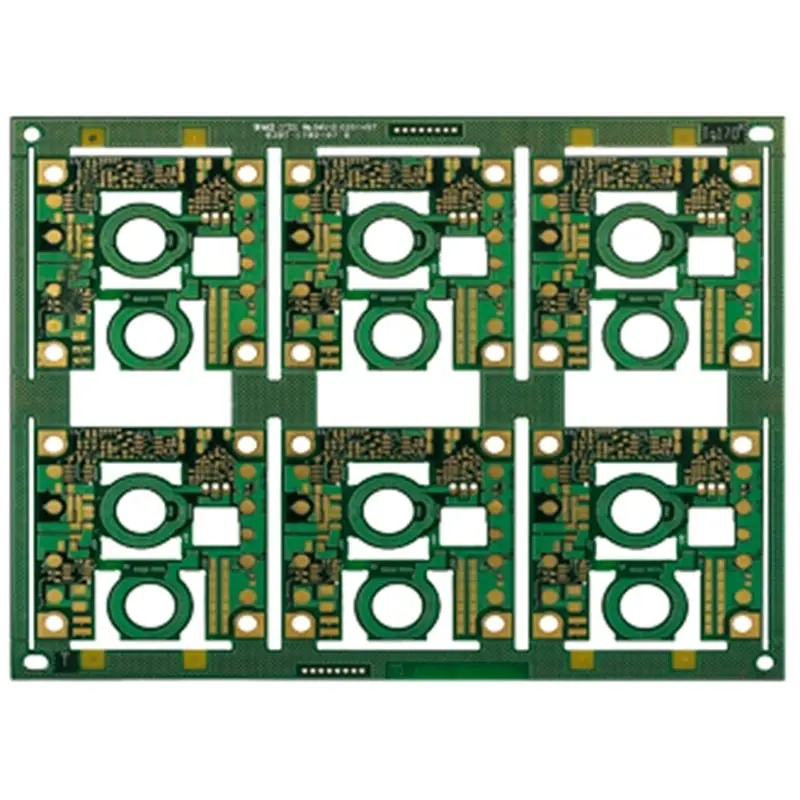
The board’s mechanical structure and surface finish also influence manufacturing and assembly. Its specified 3.5 mm thickness provides structural rigidity for equipment exposed to vibration or mechanical stress, while the 0.5 mm minimum hole diameter accommodates suitable through-hole components and vias. In addition, the Electroless Nickel Immersion Gold (ENIG) finish provides a solderable surface and protects exposed copper from oxidation. The following table summarizes the main specifications and their practical roles.
| Specification | Design Detail | Practical Role |
|---|---|---|
| Layer count | 14 layers | Supports complex signal and power routing |
| Copper thickness | 3oz (approximately 105 μm) | Provides a larger conductive cross-section |
| Base material | FR4, Tg 170°C | Helps maintain stability during thermal exposure |
| Board thickness | 3.5 mm | Provides mechanical rigidity |
| Minimum hole diameter | 0.5 mm | Supports suitable through-hole and via designs |
| Surface finish | ENIG | Supports solderability and copper protection |
These specifications should be evaluated together because electrical performance depends on the complete design. For example, the stack-up and trace geometry must match the required impedance and current levels, while the material and board thickness must suit the equipment’s thermal and mechanical conditions.
Manufacturing Controls for Consistent PCB Quality
Heavy copper multilayer boards require careful process control because thick copper and multiple layers increase fabrication complexity. Design for Manufacturability (DFM) analysis helps engineers review the stack-up, trace geometry, and via placement before production. Meanwhile, laser drilling, controlled copper plating, and cross-sectional inspection can help verify that the manufactured board meets the agreed requirements. Automated optical inspection (AOI), internal-layer X-ray verification, electrical testing, and impedance checks where specified can further support production quality.
Applications in High-Power Electronic Systems
These design features make the board relevant to industrial motor drives, power supply units, renewable energy inverters, and selected automotive power systems. In such environments, high current and repeated temperature changes can place stress on conductive paths and insulating materials. The combination of thick copper and a carefully designed multilayer structure can support power distribution, while Tg170 FR4 helps maintain stability during thermal processing and operation. However, engineers should verify current requirements, insulation spacing, temperature limits, and thermal cycling performance against the needs of each application before production.
PCB Manufacturing Support from Fully Hong
Fully Hong supports multilayer PCB projects that require coordination between electrical design and manufacturing processes. Before fabrication, engineers should confirm the copper weight on each layer, stack-up, board thickness, hole dimensions, surface finish, and inspection criteria. In addition, thermal analysis and design validation can help determine whether the proposed materials and copper distribution meet the intended operating conditions. By reviewing these requirements early, design teams can reduce avoidable revisions and establish clearer quality expectations for prototypes and production builds.
Conclusion
Reliable high-power PCB performance depends on material selection, copper thickness, stack-up design, and manufacturing quality working together. A 14-layer heavy copper PCB can support complex, high-current circuits when engineers match its structure to the electrical and thermal demands of the application. At the same time, high Tg170 FR4 material helps maintain mechanical stability during elevated-temperature processing and service conditions. With suitable design validation and manufacturing inspection, this combination can support demanding power electronics that require dependable current distribution and thermal management.




Leave a reply