
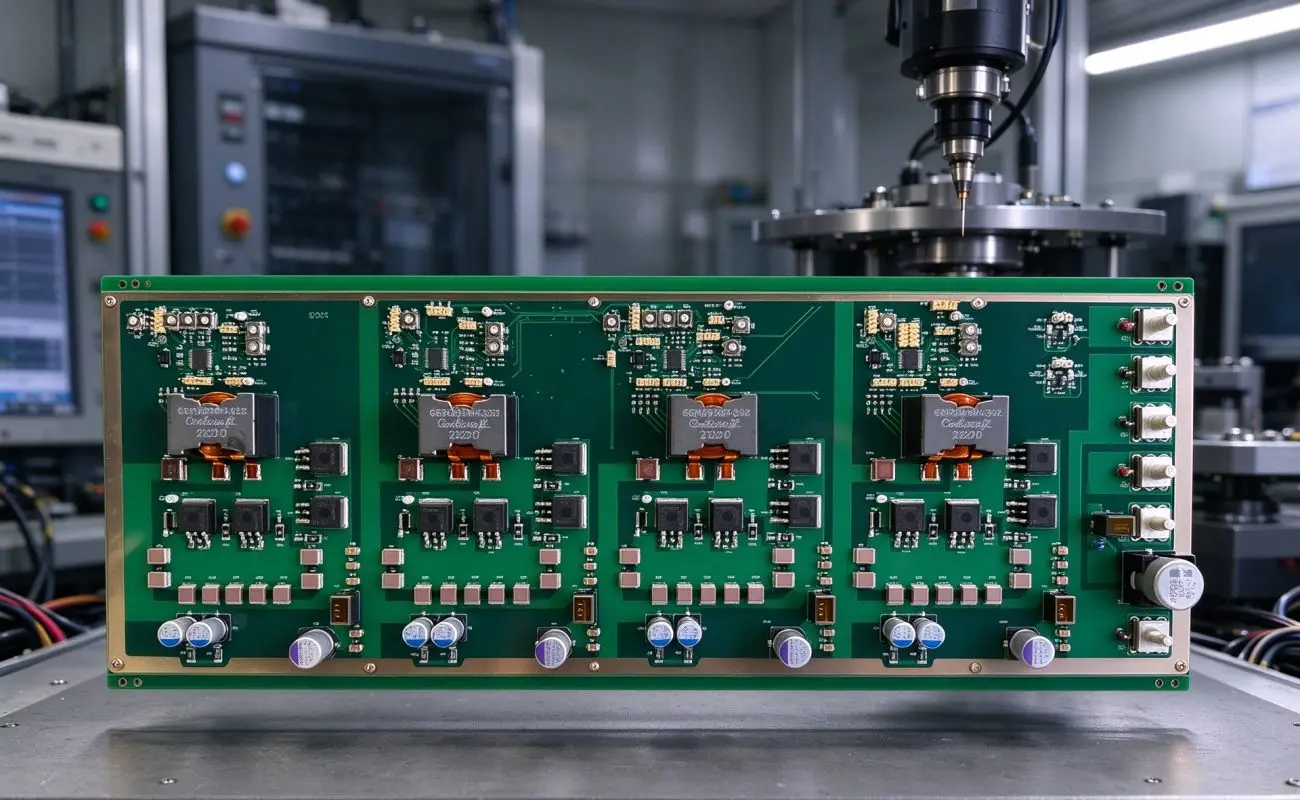
Motorantriebssysteme spielen in der industriellen Automatisierung eine wichtige Rolle, inklusive Fördertechnik, Pumps, Fans, und andere Fabrikmaschinen. These applications require circuit boards that can support power distribution, signal processing, and reliable connections between electronic components. Auswahl eines geeigneten 4-Schicht industrielle Steuerung PCBA hilft Ingenieuren organize complex circuits while maintaining a practical balance between electrical performance and mechanical stability. Jedoch, selecting the right assembly involves more than counting PCB layers. Engineers should also evaluate the board material, Kupferdicke, stackup design, component mounting methods, und Fertigungsqualität.
Why a Four-Layer Structure Matters for Motor Drive Applications
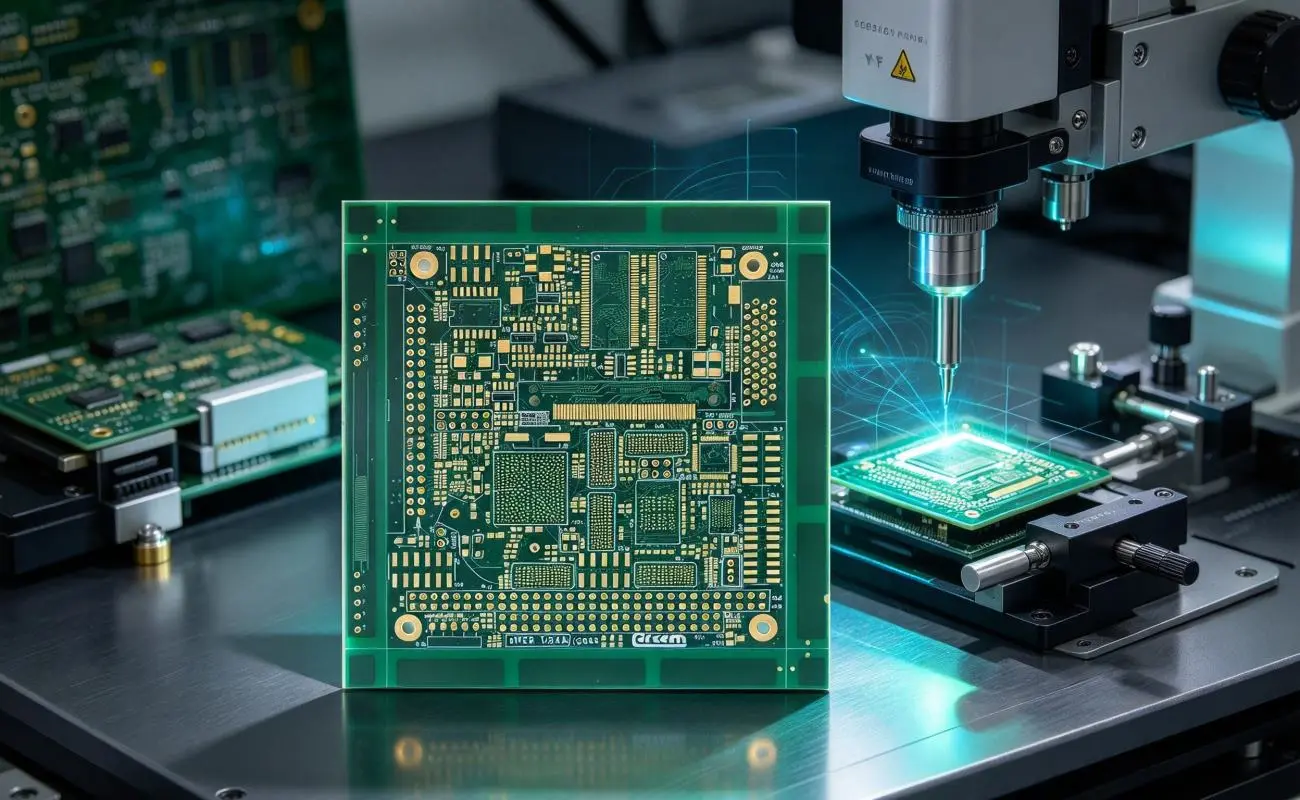
Im Vergleich zu einem einfachen zweischichtigen Design, Eine mehrschichtige Leiterplatte bietet zusätzlichen Routing-Platz und mehr Flexibilität bei der Trennung von Strom- und Signalkreisen. Für industrielle Motorantriebe, Diese Struktur kann dazu beitragen, unerwünschte elektromagnetische Störungen bei der Signalübertragung zu reduzieren, Leistung, und Bodenschichten sind ordnungsgemäß ausgelegt. In dieser Produktkonfiguration, Der vierschichtige Aufbau besteht aus zwei Signalschichten und zwei Leistungs- oder Masseebenen. Die inneren Ebenen unterstützen auch die 24-V-Gleichstromverteilung, Hilfe bei der Organisation von Verbindungen für Steuerkreise und zugehörige Komponenten.
Eine gut geplante Schichtenarchitektur bietet mehrere praktische Vorteile:
- Verbesserte Signalorganisation: Separate Signalrouting-Ebenen bieten mehr Platz für Steuer- und Rückkopplungskreise.
- Unterstützung der Stromverteilung: Spezielle Stromversorgungsebenen helfen bei der flächendeckenden Verteilung von 24 V Gleichstrom.
- EMI-Management: Ground and power plane arrangements can help reduce interference when combined with appropriate layout and grounding practices.
- Flexible component placement: Additional routing space supports the integration of microcontrollers, Relais, Anschlüsse, and signal conditioning components.
Trotzdem, the layer count alone does not guarantee stable operation. Engineers should review current paths, grounding strategies, switching noise, and component placement during the PCB design stage.
Key Factors When Selecting an Industrial Control PCB Assembly
1. Choose a Suitable FR4 Material and Board Structure
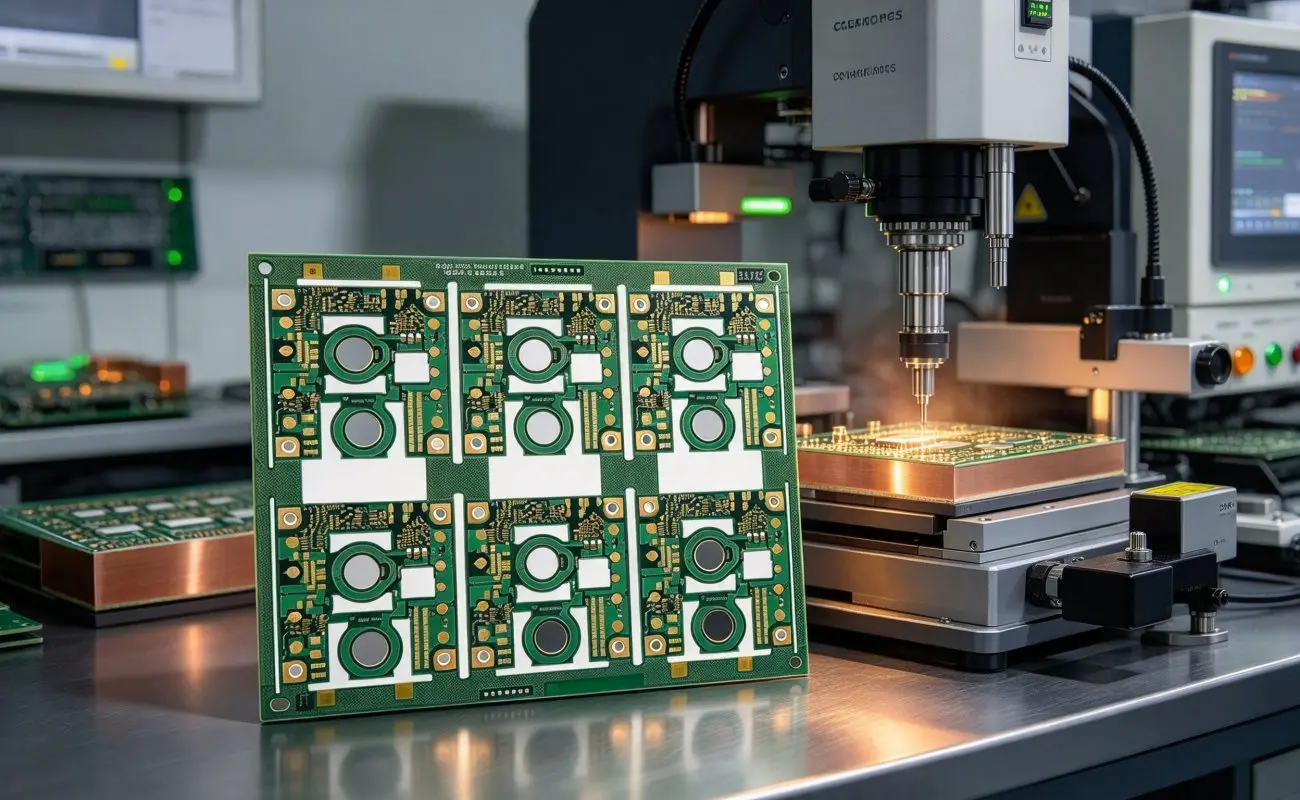
Material selection directly affects electrical insulation, mechanische Festigkeit, and long-term reliability. FR4 PCB materials are widely used in industrial electronics because they provide a practical combination of insulation properties and structural stability. The described board uses FR4 material with a dielectric constant of 4.5, a thickness of 1.5mm, and an overall size of 350 × 125mm. This large-format design provides space for high-power devices, Relais, and connectors while supporting installation in industrial control cabinets.
2. Evaluate Copper Thickness and Current Distribution
Copper thickness is another important consideration, particularly when a board handles power distribution for motor drivers and solenoid valves. The specified 1oz copper layer, entspricht ca. 35μm, is designed for moderate current loads, with the supplied product information listing up to 10A per trace. Jedoch, actual current capacity depends on trace width, Kupfertemperaturanstieg, ambient conditions, und Kühleinrichtungen. daher, engineers should calculate current requirements for each power path instead of relying on copper thickness alone.
3. Wählen Sie eine geeignete Oberflächenbeschaffenheit und Lötmaske
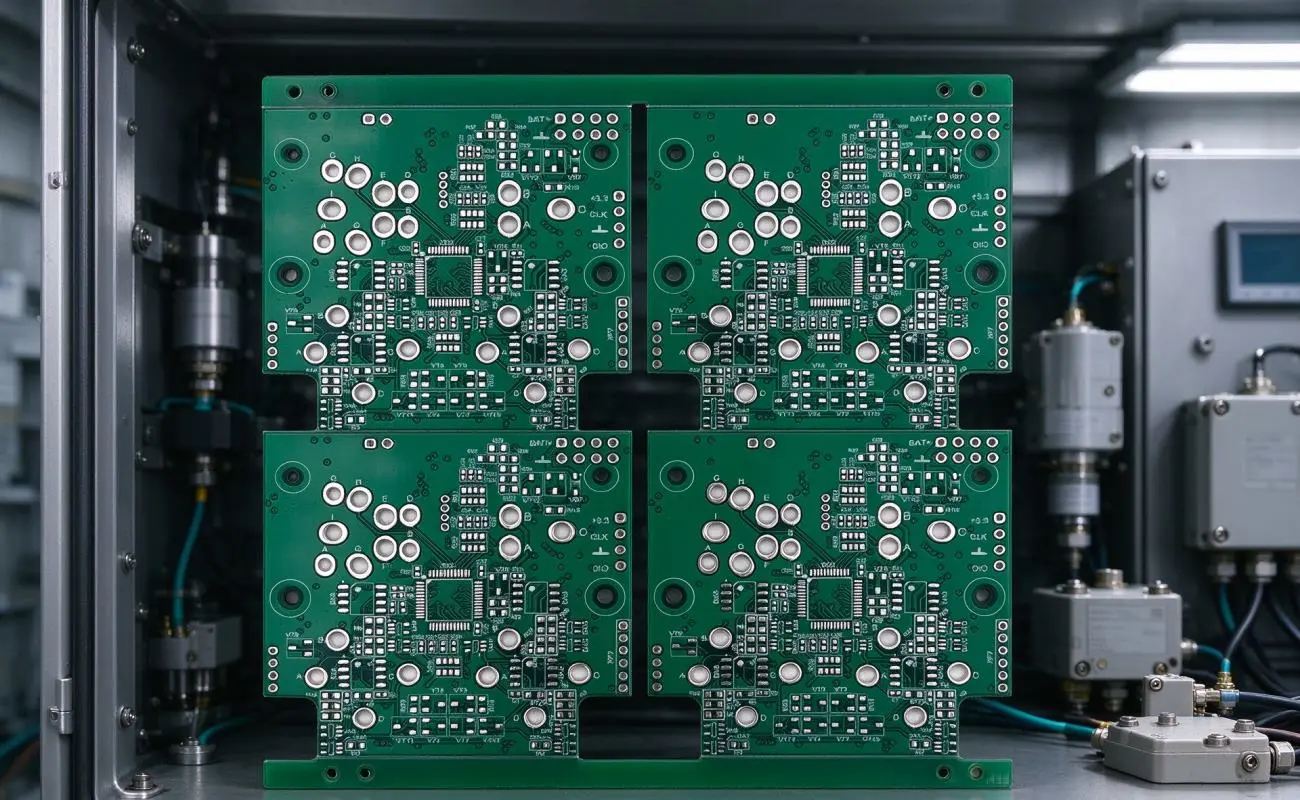
Industrielle Steuerplatinen können in Umgebungen betrieben werden, die Ölen ausgesetzt sind, Kühlmittel, Reinigungsmittel, und Temperaturschwankungen. Eine grüne Flüssigkeit, die fotografisch abgebildet werden kann (LPI) Die Lötmaske bietet eine Standardoberfläche für die visuelle Inspektion und trägt dazu bei, Kupferleiterbahnen vor Umwelteinflüssen zu schützen. In der Zwischenzeit, Die ENIG-Oberflächenveredelung verwendet eine Nickelschicht von 3–5 μm und eine Goldschicht von 0,05–0,1 μm, gemäß den mitgelieferten Spezifikationen. Diese Oberfläche unterstützt die Lötbarkeit und trägt dazu bei, freiliegende Kupferbereiche während der Lagerung und Montage vor Korrosion zu schützen.
4. Passen Sie die SMT- und DIP-Montage an die Komponentenanforderungen an
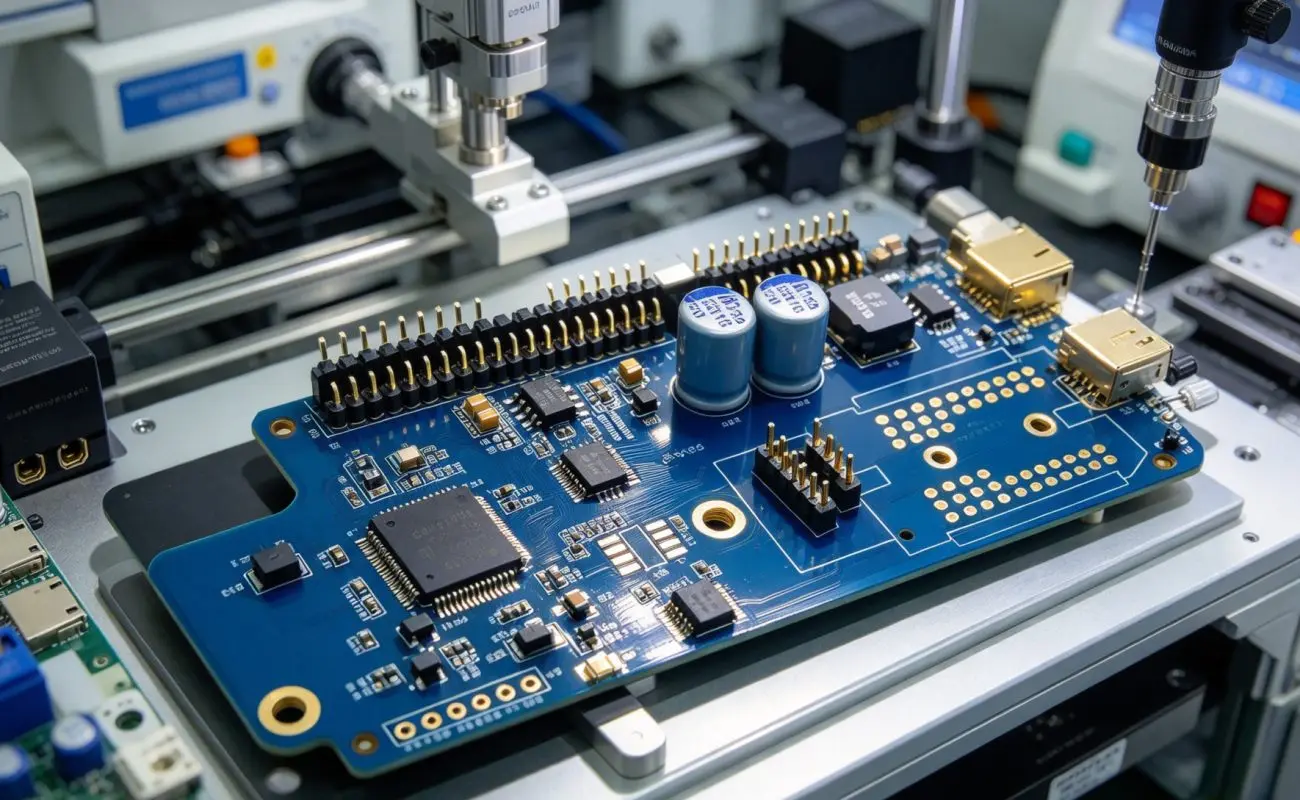
Motorantriebsplatinen kombinieren oft kompakte Steuerungskomponenten mit Steckverbindern, die sichere mechanische Verbindungen benötigen. SMT assembly supports high-density placement of microcontrollers and signal conditioning ICs, while DIP assembly is suitable for through-hole components such as terminal blocks and DB9 connectors. Combining both methods allows the PCB assembly process to accommodate different component sizes and connection requirements. Infolge, engineers can balance circuit density with the practical needs of field wiring and maintenance.
Technical Specifications to Compare
Before selecting an industrial PCB for a motor drive project, buyers should compare its electrical, mechanisch, and manufacturing specifications. The following table summarizes the key details of this four-layer FR4 board.
| Spezifikation | Product Details |
|---|---|
| Board Type | 4-Layer Industrial Control PCB |
| Base Material | FR4 |
| Board Dimensions | 350 × 125mm |
| Brettdicke | 1.5mm |
| Dielektrizitätskonstante | εr = 4.5 |
| Schichtstruktur | 2 Signalschichten + 2 Kraft-/Bodenebenen |
| Kupferdicke | 1oz (35μm) |
| Power Distribution | 24In DC |
| Listed Current Load | Up to 10A per trace, subject to design conditions |
| Lötmaske | Grüner LPI |
| Oberflächenbeschaffung | Zustimmen |
| Nickel Layer | 3–5 μm |
| Gold Layer | 0.05–0,1 mm |
| Assembly Process | SMT + TAUCHEN |
| Line Width/Spacing | 75μm |
| Inspektion | 100% AOI and flying probe testing |
| Elektrische Prüfung | Continuity ≤0.1Ω; isolation ≥100MΩ |
| Vibration Testing | 5–500Hz, 2G |
| Einhaltung | IPC-6012 Klasse 2, RoHS, ERREICHEN |
Manufacturing Quality and Testing Considerations
Even a well-designed industrial PCB can experience problems if fabrication and assembly processes are inconsistent. Aus diesem Grund, buyers should evaluate the PCB board manufacturer based on its process control, inspection methods, and ability to maintain consistent quality across production batches. These factors are particularly important when producing a 4-layer industrial control PCBA for motor drive systems, where stable electrical connections and consistent assembly quality are essential. Large-format boards require particular attention to imaging accuracy, copper plating uniformity, Abdeckung durch Lötstopplack, und Komponentenplatzierung.
For this board, the manufacturing information includes laser direct imaging (LDI) with 75μm line and spacing accuracy, as well as electrolytic copper plating with thickness verification. Quality inspection also includes 100% automatisierte optische Inspektion (Aoi) and flying probe testing. The specified electrical tests check continuity at ≤0.1Ω and insulation at ≥100MΩ, while vibration testing at 5–500Hz and 2G simulates mechanical conditions associated with industrial equipment.
When reviewing an assembly supplier, consider the following points:
- Fabrication capability: Confirm that the manufacturer can produce the required board dimensions, Schichtstruktur, and fine line spacing.
- Assembly experience: Check whether the production team can handle both SMT and DIP components.
- Inspection coverage: Review AOI, elektrische Tests, and other inspection procedures.
- Compliance documentation: Confirm the applicable IPC-6012 Class 2, RoHS, and REACH requirements.
- Production consistency: Evaluate process controls and quality records before moving to volume production.
Voll Hong supports industrial PCB and PCBA manufacturing requirements, helping customers assess board specifications and assembly needs for different electronic applications.
Industrial Applications Beyond Motor Drives
Although motor drive systems are an important application, this type of four-layer board can also support other industrial control projects. Its large format and combination of power and signal layers provide flexibility for applications that integrate multiple electronic components. Depending on the circuit design and operating requirements, potential applications include:
- PLC control panels: Integration of programmable logic controllers, I/O-Module, Relais, und Stromversorgungen für die Fabrikautomation.
- Conveyor motor drive systems: Power distribution and control connections for variable frequency drive-related equipment.
- Building automation: Circuit integration for HVAC controllers, Beleuchtungsplatten, and security equipment.
- Renewable energy inverters: Support for control and power-related circuits in solar or wind energy conversion equipment.
For each application, engineers should verify operating voltage, current demand, thermal conditions, and electrical safety requirements before finalizing the board design.
Abschluss
Selecting the right 4-layer industrial control PCBA for motor drives requires a balanced evaluation of layer architecture, FR4 -Material, Kupferdicke, Oberflächenbeschaffung, Montagemethoden, und Fertigungsqualität. A four-layer structure with dedicated power and ground planes can provide more routing flexibility and support organized power distribution, while mixed SMT and DIP assembly accommodates both compact control components and robust field connectors. Gleichzeitig, elektrische Tests, AOI -Inspektion, and vibration testing provide important quality checks during production.
Before placing a volume order, engineers and purchasing teams should confirm the complete electrical requirements, Komponentenlayout, environmental conditions, and inspection criteria with their manufacturing partner. Indem wir diese Faktoren gemeinsam bewerten, businesses can select a suitable PCB assembly for motor drive systems and other industrial control applications.

Hinterlasse eine Antwort